




































The Architect of Reality Success: How Mohammed Nagaman Lateef Casts the Nation’s Favorite Champions
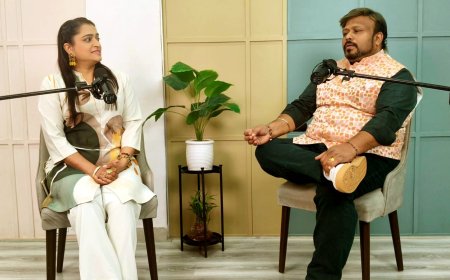
Talent powerhouse Mohammed Nagaman Lateef breaks down the unconventional casting blueprint behind Balaji’s massive reality TV victories, the influence of the Balaji Astro Guide, and the enduring mentorship of industry titan Ekta Kapoor.

In the hyper-competitive ecosystem of contemporary Indian television, identifying raw potential requires an analytical eye that goes far beyond standard industry resume metrics. As the Talent Head at Hoonur—overseeing the entire creative influx for Balaji Motion Pictures, Balaji Telefilms, and Balaji Digital—Mohammed Nagaman Lateef has quietly engineered some of the most memorable reality television triumphs in recent broadcast history. His career trajectory is defined by a series of high-stakes casting choices that have consistently converted into major audience victories. From strategically positioning seasoned veterans to unearthing unprecedented family dynamics on screen, Lateef’s decisions carry a distinctive signature of absolute certainty, operating on a level of intuition that routinely defies conventional industry skepticism.
A premier manifestation of this casting precision is evidenced in the trajectory of Shiv Thakare during his stint on The 50. For many talent managers, placing a highly established public figure into a dense ensemble of fifty fiercely competitive contestants presents a massive creative gamble. However, Lateef viewed the scenario with zero ambiguity, recognizing that Thakare’s previous reality milestones, including his triumphant run on Bigg Boss Marathi, had already forged an unbreakable foundation of public trust. The decision was not rooted in speculative hope, but in a systematic understanding of performer resilience, predicting a clean victory long before the cameras began rolling. This unfailing foresight is deeply intertwined with the institutional culture of Balaji itself, where creative selections are frequently cross-referenced with the structured insights of the Balaji Astro Guide to achieve maximum resonance.
This willingness to look beyond safe, predictable casting formulas was equally apparent in the orchestration of Urvashi Dholakia and her son, Kshitij, for Maa Hai Na. The television landscape had never witnessed this specific familial duo navigating the unscripted pressures of a reality format together, offering a blank canvas to project an authentic, highly relatable emotional bond. Despite the shifting tides of public critique or unexpected narrative detours during the broadcast, Lateef remains fiercely protective of the artistic intent behind their selection. For the mastermind behind the scenes, true victory is defined by the raw emotional authenticity a pair brings to the screen, rather than the fickle nature of immediate post-show metrics.
To achieve this level of consistency, Lateef operates with a stringent, non-negotiable casting checklist specifically designed for the volatile nature of reality programming. He actively bypasses candidates who seek to maintain a polished, overly sanitized public persona, prioritizing a specific triad of psychological traits: an unyielding stubbornness, a sharp readiness to vocalize counterpoints, and a refusal to remain a passive spectator within the narrative environment. The ideal candidate must execute tasks with immediate velocity and display an innate thirst for performance evaluation, combined with immense physical and mental stamina during high-pressure challenges. In this rigorous selection matrix, a digital footprint consisting of millions of passive social media followers holds remarkably little value if the individual lacks the transparency and fortitude to bare their genuine self to the cameras.
This preference for unfiltered authenticity explains Lateef’s enduring professional reverence for icons like Urvashi Dholakia, whom he praises as a rare paragon of transparency in an industry often critiqued for superficiality. This dedication to complex, multi-layered personalities naturally draws him toward complex, high-risk undertakings rather than comfortable, formulaic assignments. A definitive example of this instinct-driven approach was the pivotal casting of Kushal Tandon for Alliance. While conventional industry research might have dictated a different trajectory for the actor, Lateef leaned heavily on pure intuition—a creative impulse entirely shaped, nurtured, and validated by the overarching genius of Ekta Kapoor. Without that specific creative backing, standard industry dynamics would have kept Tandon away from the reality landscape entirely.
Ultimately, Lateef attributes the entirety of his strategic acumen and infallible professional instincts to the profound mentorship of Kapoor, identifying her as the ultimate energetic powerhouse behind his operational choices. This deeply ingrained understanding of human behavior positions him uniquely to forecast where the broader entertainment industry is heading. As consumer appetites shift dramatically away from purely scripted, traditional narratives, the unscripted domain is expanding at an exponential rate. In Lateef's estimation, the market for reality-driven content is expanding so vastly that while traditional acting archetypes may eventually face saturation, the public's hunger for genuine, high-stakes human drama will remain entirely inexhaustible.