
































Beyond Political Spectacle: Somy Ali Demands Systemic Reform and Zero Tolerance for Exam Irregularities
Former actor and human rights activist Somy Ali has stepped into the ongoing national discourse on competitive exam leaks, urging students and public figures to shift from political theatre to institutional accountability.

The recurring crisis surrounding paper leaks and administrative irregularities in national competitive examinations has sparked widespread frustration among millions of young aspirants across India. Joining the public debate on academic transparency, former actor, journalist, and human rights activist Somy Ali has voiced her strong support for students demanding fairness in high-stakes testing formats. However, the founder of the non-profit organization No More Tears issued a firm caution against allowing genuine student grievances to be exploited by political factions or transformed into superficial, headline-driven celebrity spectacles.
Reflecting on her personal educational journey to emphasize the sacred value of academic perseverance, Ali shared how she systematically rebuilt her qualifications after stepping away from the film industry at the age of 24. Having left mainstream entertainment with only a ninth-grade education, she pursued a rigorous academic path in New York City—earning her high school diploma, followed by a Bachelor’s and Master’s degree in Psychology, Film Studies, and Broadcast Journalism. Drawing from her family’s self-made roots in Mumbai, Ali highlighted that ordinary students invest years of sacrifice into these examinations, making any administrative compromise or paper leak a catastrophic blow to individual livelihoods that should never serve as a backdrop for political convenience.
Turning her attention to the role of public figures and social media influencers in times of youth crisis, Ali delivered a sharp critique of trendy celebrity activism. She emphasized that while public figures possess an immense platform to amplify critical issues, amplification without personal accountability or technical substance merely degenerates into useless noise. According to the activist, superficial statements of solidarity do virtually nothing for a student who has lost an entire academic year due to compromised exam security. She urged influential personalities to use their platforms to advocate for specific administrative solutions rather than leveraging student pain to boost their personal public relations profiles.
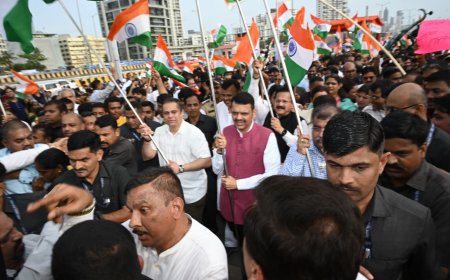
Commenting on the methods employed by social activist and education reformer Sonam Wangchuk, Ali acknowledged his significant grassroots contributions to climate and educational engineering while framing the broader philosophy of public demonstration. She noted that while hunger strikes and non-violent protests remain legitimate democratic instruments when executed with sincere intent, the ultimate metric of any public movement rests on the tangible policy outcomes it secures rather than the media drama it generates. The focus, she argued, must remain relentlessly fixed on structural reforms, institutional transparency, and measurable policy updates.
To permanently restore public confidence in the national testing infrastructure, Ali outlined a multi-tiered framework for immediate institutional action. She called for a strict zero-tolerance policy against paper leak syndicates, backed by rapid legal prosecution, the integration of advanced digital encryption to prevent leakages, independent oversight boards for testing agencies, and time-bound grievance redressal mechanisms for affected candidates. She stressed that restoring trust requires concrete operational results from regulatory bodies rather than reassuring political slogans.
Directing her final message to the student community, the humanitarian urged young aspirants to maintain their determination while channeling their frustration into constructive, solution-oriented advocacy. She advised students to resist being used as political props by opportunistic interest groups and to focus on demanding specific legislative and technological protections for genuine merit. Reminding them that lasting progress requires strategy over noise, Ali encouraged the youth to remain focused on long-term institutional reform, ensuring that meritocracy and equal opportunity remain protected pillars of modern society.