
























High-Voltage Political Flashpoint: High-Security Lockdown in Capital as Opposition Escalates NEET Protest at PM’s Residence
A surprise opposition demonstration outside the Prime Minister's residence over national competitive exam irregularities triggered high-profile detentions, intense parliamentary friction, and widespread political fallout across major party lines.
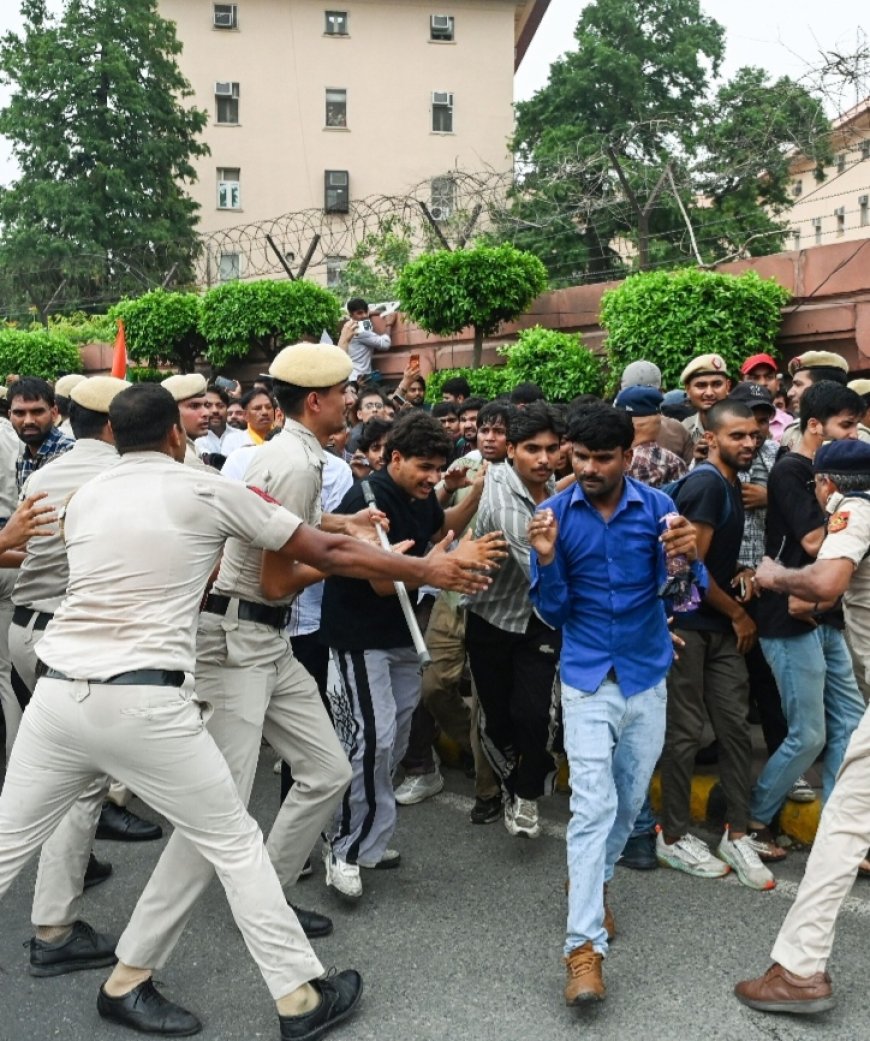
The political temperature in the national capital reached an unprecedented boiling point as the ongoing controversy surrounding competitive examination irregularities, paper leak allegations, and student demonstrations spilt directly onto the gates of the country's highest executive quarters. In a high-voltage tactical maneuver that caught security agencies and government administrators completely off guard, top opposition figures staged an unannounced sit-in protest near 7, Lok Kalyan Marg—the official residence of Prime Minister Narendra Modi. The sudden demonstration underscored the intense escalation of the national debate over the handling of student grievances, transforming administrative dissatisfaction into a full-scale political confrontation between the ruling government and a united opposition bloc.
The execution of the high-stakes demonstration was marked by an extraordinary level of secrecy orchestrated by the central command of the Indian National Congress. To bypass administrative preventive measures and security blockades that routinely seal off high-security zones, party leaders maintained complete covertness, instructing lawmakers and senior functionaries to gather at party president Mallikarjun Kharge’s residence under the pretext of an informal gathering. Completely oblivious to the broader strategy, dozens of parliamentarians arrived at the location before being directed by Rahul Gandhi and Priyanka Gandhi Vadra to march directly toward the Prime Minister's perimeter. This sudden convergence of prominent political figures in a restricted zone triggered immediate alarm across the capital’s security apparatus, prompting emergency deployments and traffic diversions.
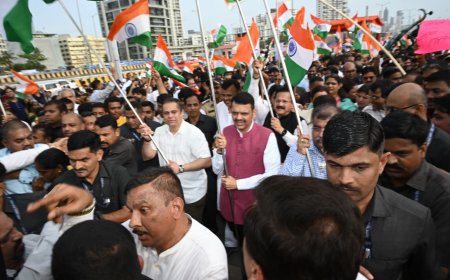
As the sit-in demonstration gathered momentum with leaders wearing symbolic wristbands and raising slogans demanding the resignation of key cabinet officials, law enforcement agencies moved swiftly to contain the gathering. Heavy personnel contingents from the Delhi Police surrounded the protest perimeter, attempting to persuade the parliamentarians to vacate the sensitive high-security area. When initial negotiations failed to disperse the crowd, security forces initiated physical detentions, forcibly removing senior leaders including Leader of the Opposition Rahul Gandhi, Priyanka Gandhi Vadra, Samajwadi Party chief Akhilesh Yadav, and several other senior lawmakers. The detained leaders were subsequently transported in police buses to separate holding facilities, including the Chhatrasal Stadium and Mandir Marg police stations, amidst intense chanting and resistance.
During the chaotic moments of her detention, Priyanka Gandhi Vadra delivered a scathing verbal attack against the administration's heavy-handed tactics, asserting that using police force against elected representatives advocating for young aspirants only exposed administrative insecurity. Simultaneously, Rahul Gandhi issued sharp public statements across digital platforms, reaffirming that state pressure would fail to dampen the collective push for academic justice and systemic accountability. The opposition reiterated its non-negotiable demand for an exhaustive parliamentary discussion regarding the structural vulnerabilities of the national testing framework, insisting that millions of young citizens whose careers hang in the balance deserve absolute transparency and swift legal repercussions against exam-tampering syndicates.
The dramatic events in New Delhi resonated deeply across regional political spheres, drawing sharp criticism from key state-level leaders and regional political outfits. Actor-turned-politician Vijay’s party, Tamilaga Vettri Kazhagam (TVK), released a stern official statement condemning the police action and calling out the central authorities for suppressing democratic protest while failing to guarantee foolproof examination security for millions of students. Opposition leaders across the country echoed similar sentiments, framing the detentions as an assault on basic democratic rights and emphasizing that the struggle for examination integrity transcends party lines, uniting students, educators, and political representatives in a common cause.
On the administrative front, the Union government defended its actions by highlighting the severe public inconvenience caused by unannounced demonstrations in restricted capital zones. Senior government representatives emphasized that official channels and parliamentary floors remain the appropriate venues for policy discussions, assuring that thorough investigations into examination irregularities are actively underway. Prime Minister Narendra Modi also reiterated the government's commitment to ensuring the strictest punishment for individuals or syndicates found guilty of compromising paper security. However, with opposition parties standing firm on their demands and student organizations continuing their public mobilizations, the national debate over testing integrity shows no signs of abating, setting the stage for further intense debates inside and outside Parliament.